Consumer GPUs, hydro power, cold air that does the cooling for free most of the year. The cards take jobs on the GPU marketplaces around the clock. Net income market-buys DATACENTER and burns it. Creator fees buy the next card. The timeline shows where that ends up.
6GPU
6GPUs
–net income / month
–bought & burned / month
creator fees → GPU #7read from the chain
$0.000.000 SOL
of– 0% · –to go
every fee the coin generates lands here. when the bar fills, a card gets ordered.
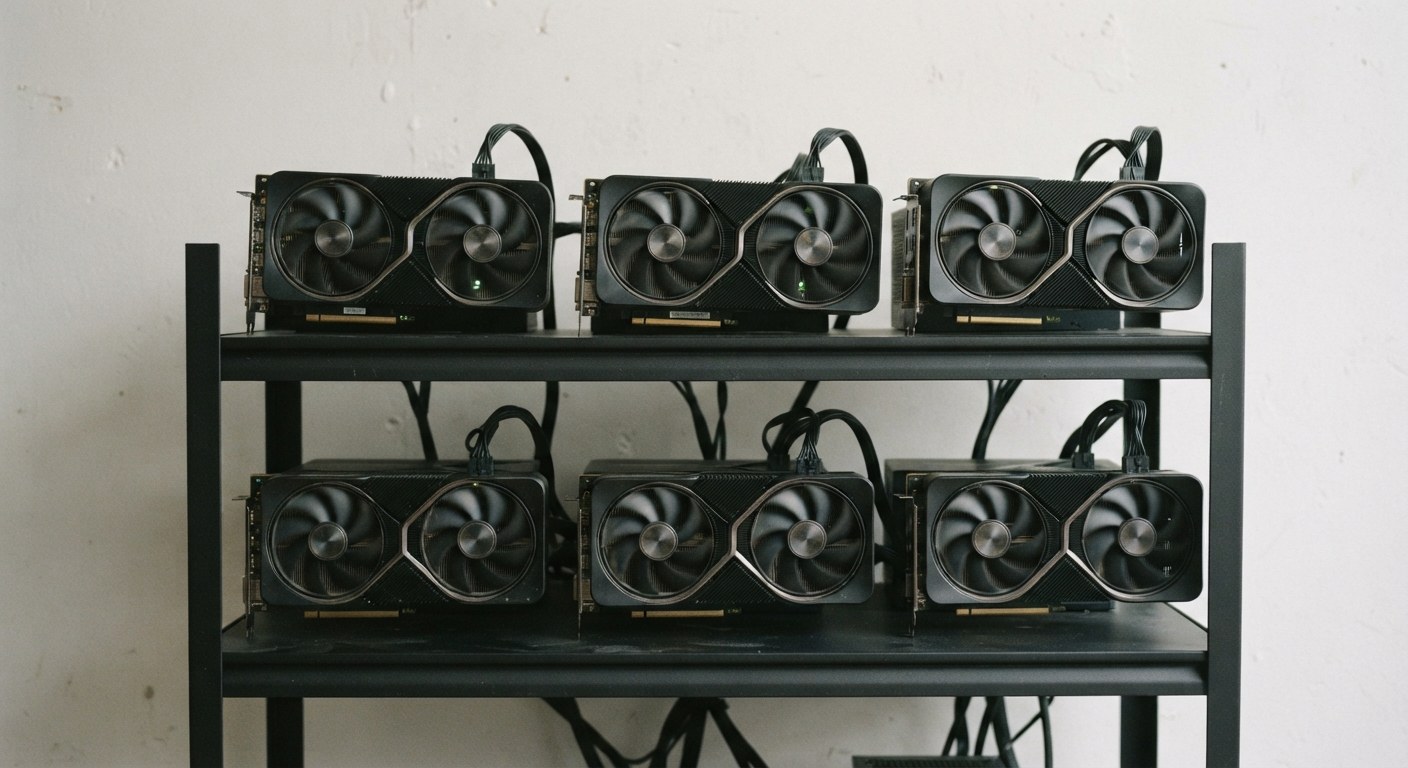
Six identical boxes: an RTX 4090 with 24 GB, an i9-14900K, 64 GB DDR5, 2 TB NVMe, a 1000 W Platinum supply.
rack 01 · top shelf 01 to 03, bottom shelf 04 to 06finnmark · NO4
–GPUs in the rack
–working
–net per GPU / month
–net for the rack / month
–marketplaces
–expected uptime
the loop
two flows. both point at the coin.
The cards earn money whether anyone holds the coin or not. That money buys the coin and burns it. The coin's creator fees do not pay anyone a salary. They buy the next card, which earns more, which burns more.
–treasury, live on-chain
–towards GPU #7
–DATACENTER burned
–buybacks so far
01 · marketplace income
100% of net income buys and burns.
The cards are listed on the GPU marketplaces people already use. Jobs arrive on their own: inference, image generation, fine-tunes. Payouts land in USD. Power is paid first, because the cards do not run on optimism. The rest is converted to SOL, DATACENTER is bought on the open market and sent to the burn address. Every buyback is listed below with its transaction.
vast.ai / runpod→USD→− power→SOL→buy + burn
02 · creator fees
Fees buy hardware.
Trading fees from the coin accrue to the treasury wallet. When the balance covers a new host and card, one gets ordered, built on the workshop bench and racked as the next node. Then it starts earning, and the first loop gets bigger. The treasury balance you see here is read from the chain, not typed in.
––
date
net income
SOL spent
burned
tx
how the loop runs
five steps, then again.
01
the cards work
Six 4090s listed on the marketplaces, online around the clock. Jobs come to them. Nobody here picks the work.
02
payouts land
The marketplaces pay out in USD when a job ends, normally weekly in practice.
03
power gets paid
Hydro power in NO4 is cheap, but it is not free. The bill comes off the top, always.
04
buy and burn
What is left becomes SOL, buys DATACENTER on the open market, and goes to the burn address. Transaction in the ledger.
05
fees buy the next card
Creator fees accumulate in the treasury. Enough for a host and a card means GPU #7, and step one gets bigger.
the farm
Economics
Home hosting pays modestly. A 4090 that is busy most of the month covers its power many times over and slowly pays itself off. None of that was ever going to be a salary, which is why all of it can go to buying and burning the coin without anyone missing it.
Why north
Cheap hydro.NO4 is usually the cheapest price area in Norway, and household power in Finnmark has no VAT and no consumption tax.
Free cooling.Ambient air is below 10°C most of the year. The cards run cooler than they would in any apartment.
Waste heat.Six loaded cards are a 2 kW heater. In winter the workshop needs that anyway.